An officiating ceremony is usually a short programme with a long tail of planning behind it. The VIP may be on stage for less time than the set-up crew spends rigging the screens, but that short window is what guests, media and the organisation's leadership will remember.
This checklist is for event owners at ministries, agencies, local authorities and GLCs who need a launch, perasmian or ground-breaking to run on time and look right. It draws on ceremonies Creative Creed has delivered, from a national conference officiated by the Prime Minister to a ground-breaking ceremony for a district office.
8–12 weeks out: set the foundations
- Agree the objective. What is being launched or officiated, who needs to see it, and what should the headline photo show?
- Request VIP availability early. Senior officials' diaries fill quickly and can change late. Hold a preferred date and a fallback.
- Open a line to the protocol office. The VIP's office or the relevant protocol unit will have its own requirements for arrival, seating, the programme and security. Ask for them in writing and name one contact on each side.
- Confirm the venue. Check VIP drop-off and holding room access, stage size, power, load-in times and whether the venue allows overnight set-up.
- Decide the format. A standalone ceremony, or an officiating moment inside a larger event? At the PEDi MADANI Conference 2023, the Prime Minister officiated a national conference at Putrajaya International Convention Centre that also carried an exhibition and entrepreneur showcases. At Festival Ikonik SA Sentral 2024, the official launch sat inside a three-day community festival for PKNS.
- Set the budget and approval route, including any quotation or tender process, so procurement does not become the critical path.
Build the run of show
The run of show is the single document everyone works from: emcee, technical crew, protocol, ushers and media. Draft it early and expect several versions. A typical officiating programme includes:
- Guest arrival and registration, with guests seated before the VIP arrives;
- VIP arrival: the welcoming party, any cultural or ceremonial element, and the walk to the hall;
- Opening items, such as the doa and the national or state anthems, where the programme calls for them. Confirm the order with the protocol office rather than assuming;
- Speeches: usually a welcoming address followed by the officiating address. Agree who speaks, in what order and for roughly how long;
- The officiating moment, with the VIP and invited guests moved to their marks on cue;
- Photo call and media, including a group photograph and any press interview;
- Exhibition walkabout or refreshments before the VIP departs.
Write every cue into the script: who moves, which screen changes, which track plays and who says "go".
Choose the officiating gimmick
The gimmick is the visible moment that says "it is now launched". Pick one that suits the occasion, the venue and the photograph you want:
- LED screen reveal: the VIP triggers a video or graphic that reveals the logo, project or theme. Flexible, and easy to rehearse.
- Button or gimmick mechanism: a physical prop the VIP presses, pulls or touches, which triggers a reveal, effect or video. It gives the photographer a clear action.
- Plaque unveiling: a traditional choice, and a permanent record of the occasion.
- Ground-breaking: for a construction project, often staged on site with a dressed set.
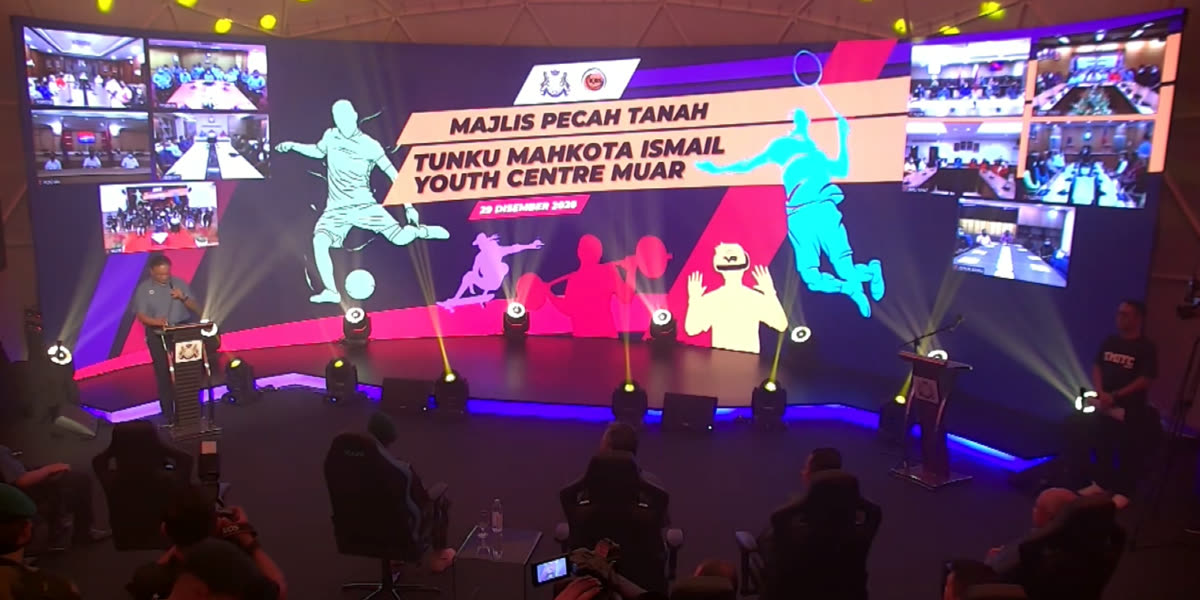
The gimmick works best when the set around it carries the same idea. For the TMIYC Muar 2020 ground-breaking ceremony, the brief called for luxury, modernity and a futuristic feel, so Creative Creed designed an LED arch entrance and an interactive gimmick mechanism for the ceremonial moment. See the TMIYC Muar 2020 project, and our custom fabrication page for how launch props are built.
Whatever you choose, plan a manual backup. If a trigger fails, the operator should be able to run the reveal from the control desk so the VIP never waits.
Technical requirements
- Sound: clear speech is the priority. Plan microphones for the rostrum, the emcee and the officiating point, with a spare ready.
- LED screens: plan the content for every cue: holding slides, speaker names, the launch video and the post-launch graphic.
- Lighting: light the stage and the officiating point for cameras, not just for the room.
- Prompter, if the VIP or emcee uses one.
- Live broadcast: if the ceremony will be streamed or shown to an overflow area, plan camera positions and the feed early. See our live broadcast service.
- Power: confirm supply and backup, especially for outdoor and ground-breaking sites.
Guest management
- Build the guest list with categories (VIP, invited guests, agencies, media, public) and a seating plan for each.
- Send invitations with arrival times, dress code and parking or drop-off details.
- Brief usherettes on the seating plan and on who escorts the VIP party.
- Prepare name cards or reserved signs for front-row seats, and keep a few spare seats for late confirmations.
Media and protocol
- Agree media access, the photo call position and any interview point with the organiser's communications team.
- Prepare a press kit and a short media statement in advance.
- Check the officiating party's titles and the order of mention in every script, slide and press release, with the protocol office.
- Plan the crowd at the officiating point so the photograph shows the VIP and the gimmick, not backs of heads.
If royalty will attend, the palace's protocol office sets the requirements; plan around them from the first meeting.
Rehearsal and the day itself
- Run a full technical rehearsal with the final content, gimmick and script, using stand-ins for the VIP party.
- Walk the VIP route from car to holding room to stage, and time it.
- Hold a short briefing on the morning with the emcee, stage manager, technical crew, ushers and protocol contact.
- Keep one person on a radio with the VIP's advance team so the hall knows exactly when the VIP arrives.
Plan for what can go wrong
- VIP delay: prepare a holding programme, such as a video loop, a short performance or the emcee, that can stretch or shrink.
- VIP change: have speech and slide versions ready for a representative officiating instead.
- Weather at outdoor sites: tentage, covered walkways and a wet-weather route.
- Technical failure: backup microphones, a manual trigger for the gimmick and a spare playback machine.
- Running late: agree in advance which items can be cut.
Planning a ceremony?
Creative Creed Associates Sdn. Bhd. is a creative agency for events and exhibitions with offices in Shah Alam, Johor Bahru, Kuching (Bau) and Penang. If you are planning an officiating, launch or ground-breaking ceremony, talk to us about the programme and production, or see our corporate events service.